How to Know When to Fire a Client: Measure Client Profitability First
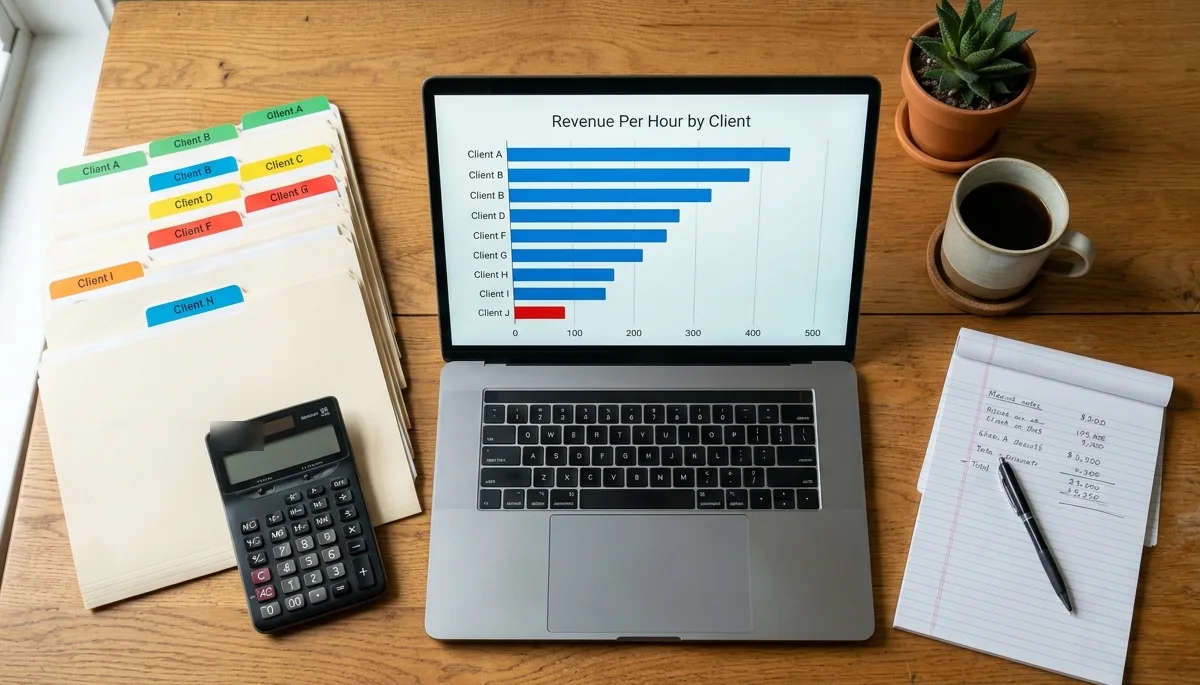
How to know when to fire a client: measure profitability per client, read the warning signs, then reprice or exit cleanly under TPB and ATO rules.
Practical guides on AI for Australian accountants, bookkeepers and small business owners: Xero and MYOB automation, BAS and GST, bank reconciliation, AI bookkeeping software, data security, and what dedicated AI can and cannot do
Showing 1-6 of 72 articles
How to know when to fire a client: measure profitability per client, read the warning signs, then reprice or exit cleanly under TPB and ATO rules.
How to pay yourself as a director in Australia: salary, dividends or a loan. The ATO rules on PAYG, super, franking and Division 7A, and the cash flow impact.
Which finance tasks should a business owner delegate first? A ranked order for Australian small businesses, from invoicing to BAS, and what to keep.
Interest rate rise hit your small business? Build a 13-week cash flow forecast in Australia that models repayments, ATO debts and slower-paying customers.
Too many software subscriptions in a small business? Audit every recurring charge, cut overlap, fix the GST coding and remove access people no longer need.

Can AI do your bookkeeping? What AI handles in Xero, MYOB and QuickBooks for Australian small businesses, what still needs a bookkeeper, and what it costs.
A buyer's guide to AI bookkeeping in Australia: what AI bookkeeping software automates, the four types of tools, and how to check data residency and review.

AI for bookkeepers, from the practice owner's side: which jobs to hand over first, a 30-day rollout, how to price, client data rules and where you still review.
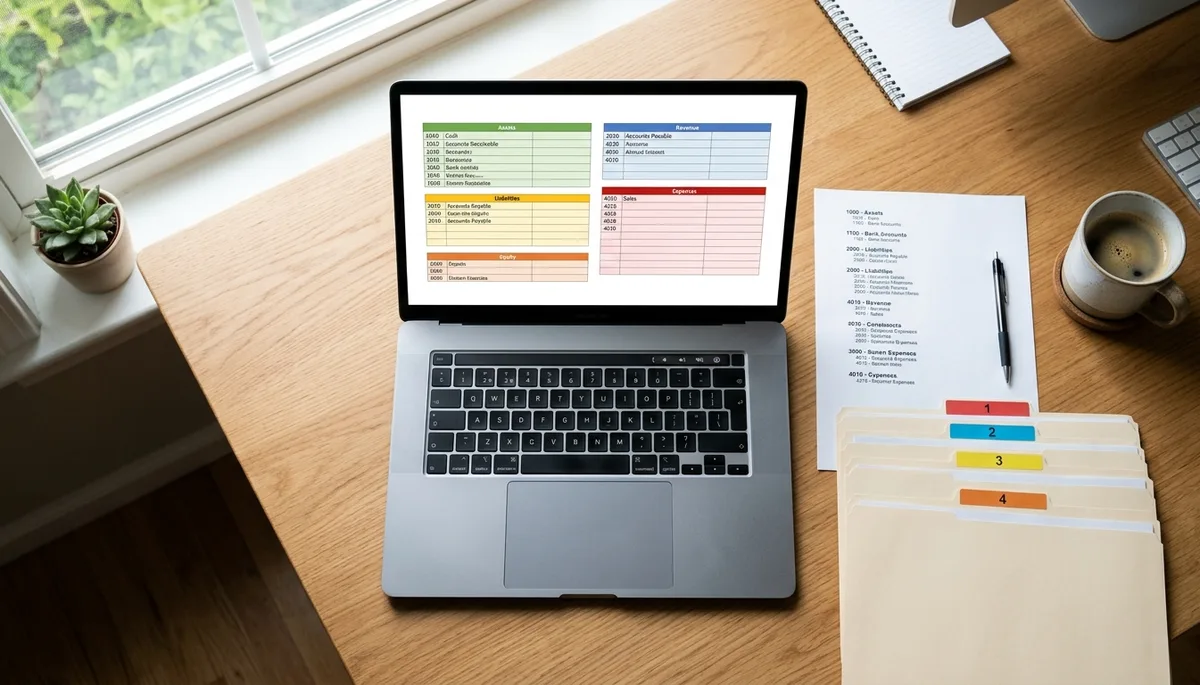
A standard chart of accounts for Australian small business: a ready-to-use table, GST notes from the ATO, and the rules that keep reports clean.
An AI bookkeeper codes bank feeds, reconciles accounts, preps BAS papers and chases debtors in Xero or MYOB while you approve. What it does and costs.
Duplicate deposits in the bank feed or payroll debits not matching? A diagnosis order for Australian bookkeepers, including Payday Super timing.
Messy books and no idea where to start? A bookkeeping cleanup order for Australian businesses, and when to catch up the old file or start fresh.
Owner personal expenses paid from the business account with no receipts? How to record drawings, loan accounts and Division 7A risk correctly.
Got an auDA domain renewal or ASIC notice you did not expect? How to spot a fake invoice in Australia, the 2-minute check before you pay, and what to do if you already paid.
Corporate clients not paying 30-day terms? Use Australia's payment times data, a weekly collections routine and GST timing to get paid sooner.
The card surcharge ban started 1 October 2026. What EFTPOS and merchant fees now cost Australian small businesses, how to reprice, and how to code fees and GST.
Business tiers stop model training, but not US storage or flagged-chat retention. What bookkeepers and BAS agents should check before using them for client data.
Human in the loop AI accounting works when review is risk-weighted and sampled, not uniform. A review design with thresholds, sample rates and a 90-day plan.
An AI audit trail must record the inputs, the system version, the source records read and the human approver. Here is the test most Australian firms fail.
AI is not saving time in accounting because the hours go at the boundaries between systems. Count your handoffs, then see what actually removes them.
AEO for accountants, explained: what AEO and GEO really are, plus a 10-step playbook to get your firm cited by ChatGPT and Google AI Overviews.
An AI policy for an accounting firm, as a template: nine sections an Australian practice can adapt in an afternoon, grounded in TPB and Privacy Act rules.
Most AI agents for accounting firms run in the back office. The bigger win is a client-side agent that chases missing documents. Here is the split.
Australia's accounting staff shortage, not AI, is what limits your practice. Which roles are genuinely short, and what to hand a dedicated AI first.
AI hallucination in financial reporting is a real risk. Why AI invents numbers, and four checks that catch a made-up figure before it reaches the board.
MCP accounting, explained: what an AI agent can actually read and write inside Xero, QuickBooks and MYOB today, and where to draw the write line.
TPB AI guidance explained for practitioners: when you must tell clients you use AI, which consent form the TPB accepts, and who wears the error.
How to automate bank reconciliation with AI: matching feed lines to the ledger, learning recurring patterns and surfacing only genuine exceptions.
Stop typing up invoices and bills. The modern payables flow: capture, AI extraction, auto-coding, PO matching, approval, posting to Xero, MYOB or QuickBooks.
Can you trust AI to categorise transactions? Yes, with a review step. How it works, where it goes wrong, and how to build a workflow you can trust.
The AI in QuickBooks and Xero disappoints: it is generic, acts on thin context and has no review step. Why, how to limit it, and when a dedicated AI is better.
The best AI tools for small accounting and bookkeeping firms in Australia, compared by job: document capture, reconciliation, BAS prep and dedicated AI. Vendor neutral.
How working bookkeepers use AI in a normal week: receipt capture, categorisation, reconciliation triage, client emails, month-end commentary and debtor chasing.
Can AI do an audit in seconds? Not a real one. AI speeds up sampling, anomaly detection and tie-outs, but scepticism, evidence and sign-off stay human.
Has AI genuinely automated anything in accounting? An honest audit of the real wins (data entry, matching, categorisation, first drafts) versus vendor hype.
Is bookkeeping still a good career with AI? Yes, but the job is changing. The state of demand, the shifting entry-level rung and whether to start or stay.
Will AI take your bookkeeping job? It takes the repetitive parts (data entry, reconciliation, coding), not the judgement, review and client work.
How to automate BAS preparation in Australia: GST coding at source, AI anomaly checks and control account reconciliation. A registered agent signs off.
A reminder cadence that actually collects: when to nudge, how to let AI draft the escalating emails, and which debtors to chase first.
Are AI accounting tools safe with client financial data? Which plans train on your data, which do not, where the data is stored, and the checks to run before you paste anything.
When AI compresses compliance hours, hourly billing breaks. How firm owners move to value and fixed-fee pricing, package advisory work and sell the offer.
Service-based SaaS sells finished work, not software you still operate. What it means for Australian accounting practices and how to evaluate it.
An hour-by-hour playbook for onboarding an AI Employee in its first 24 hours: kickoff call, system access, tone of voice, escalation rules and supervised work.
Australia has over 40,000 accounting firms and too few juniors. How practices use an AI Employee for Xero reconciliation, BAS prep and document chasing.
A candid look at what an AI Employee cannot do in 2026. Regulated sign-off, audit opinions, new judgement calls and relationship work still belong to a human.
The workflows an Agentive AI Employee runs in HubSpot CRM: lead qualification, deal hygiene, meeting prep, follow-up sequencing, activity logging and reporting.
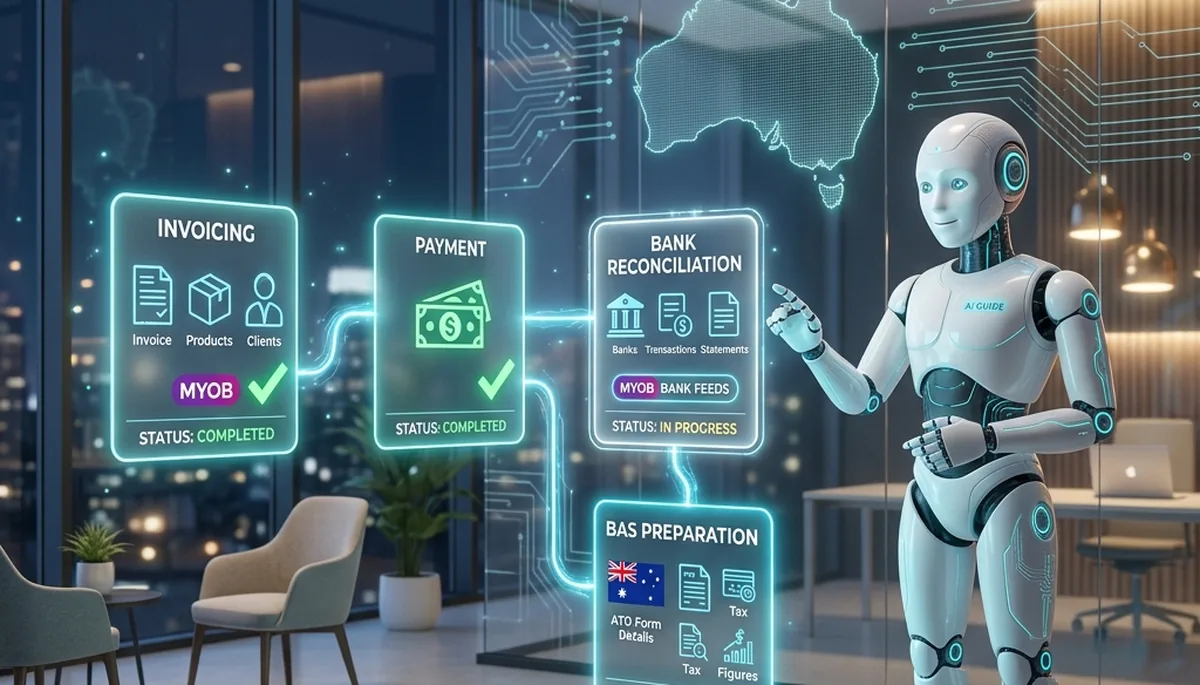
How an AI Employee runs bank reconciliation, invoicing and BAS inside an MYOB file: what works today, what does not, and an honest MYOB versus Xero comparison.
What an AI Employee does inside Xero for Australian firms: bank reconciliation, invoicing, BAS and GST review, contacts and multi-org support.
Seven jobs where a composable AI Employee beats single-purpose SaaS: BAS prep across Xero files, debtor chasing, report rollups, inbox triage, invoice coding.
Role-by-role comparison for Australian SMBs: where an AI Employee wins on cost, hours and consistency, where a human wins on judgement, and why many run both.
Data governance view of AI Employee security for Australian finance firms: single-tenant, AWS Sydney inference, audit logging, CPS 234, RG 255, TPB.
What does an AI Employee really cost in Australia? Honest numbers, salary comparisons with junior staff, and a worked ROI for a 5-person bookkeeping practice.
Plain-English architecture for Australian SMB owners: the LLM, skills layer, memory store, audit log and single-tenant server, all hosted in AWS Sydney.
AI agents are building blocks. An AI Employee is a managed, single-tenant team member built on top. Here is how the two compare for Australian SMBs in 2026.
The biggest benefits of AI employees in finance operations for Australian accounting firms: lower costs, better accuracy and more billable hours reclaimed.
Best practices for implementing AI employees in finance operations, with proven frameworks. Month-to-month plans, no lock-in contract.
AI employee for finance operations automates bank reconciliation, accounts payable and reporting. No lock-in contract, deployed within 1 hour.
Can AI prepare your BAS? What AI can safely do for BAS and GST returns in Australia, what a registered agent must still check, and how firms save hours each quarter.
What an AI employee is, how AI for accounting firms works, and how AI in bookkeeping cuts costs and frees up billable hours. From A$500 + GST per month.
AI employee accounts payable, bank reconciliation and Xero integration are reshaping Australian finance ops. See how automation delivers measurable ROI.
AI employees for accountants automate reconciliation, BAS prep and data entry. Deploy within 1 hour, save 70% vs hiring. No lock-in contract.
AI employee tax preparation automates BAS lodgement, GST reconciliation and payroll review for Australian accountants. No lock-in contract.
What AI bookkeeping actually does in Xero and MYOB: bank coding, reconciliation, BAS prep and data entry, where a human still reviews, and how practices take on more clients.
A founder's AI Employee audited the books after their bookkeeper signed off. It found miscategorised transactions, wrong GST claims and 38 missing receipts.
Consulting founders juggle ERP systems, client work and operations daily. An AI Employee automates ERP tasks, catches errors and gives founders their time back.
Australian accounting firms are drowning in admin, email triage, BAS prep and client chasing. An AI Employee handles it 24/7 for a fraction of hiring costs.
A practical guide for Australian SMBs: what AI staff actually do, how they plug into Xero, email and your CRM, and how to make your first AI hire within an hour.
An honest answer from the Australian team that builds this software: the 6 tasks AI already handles in 2026, the ones that stay human, and what to change now.
Agentive AI Employees connect to HubSpot CRM, Shopify, email, social media and 50+ business tools to automate your workflows and boost productivity.
Australian VAs cost A$1,500 to A$3,500 a month and work set hours. Compare cost, availability and skills, and see when a hybrid of the two works best.
Overwhelmed by AI agent hype? This practical guide cuts through the noise and shows Australian business founders exactly where to begin with AI automation.
How Agentive®'s AI Employees (AI agents) deliver projects 70% cheaper. Understanding the economics of our AI-Native Platform with human expert supervision.
Get the latest insights on AI, automation, and the future of IT delivery delivered to your inbox.
Weekly insights • No spam • Unsubscribe anytime